A Himalayan Time Bomb Is Ticking
The glaciers of the Hindu Kush Himalaya (HKH) form part of the largest concentrations of snow and ice outside the polar realms, earning the name ‘Third Pole’. We look at seven of them in our neighbourhood.

The glaciers of the Hindu Kush Himalaya (HKH) form part of the largest concentrations of snow and ice outside the polar realms, earning the name ‘Third Pole’. We look at seven of them in our neighbourhood.
Climate change poses a significant threat to glaciers in the HKH region.
Though scientists and researchers are investigating the root cause of the Nepal disaster that has killed
over a thousand people, the amount of data they have collected over the years point towards climate change
as the trigger.
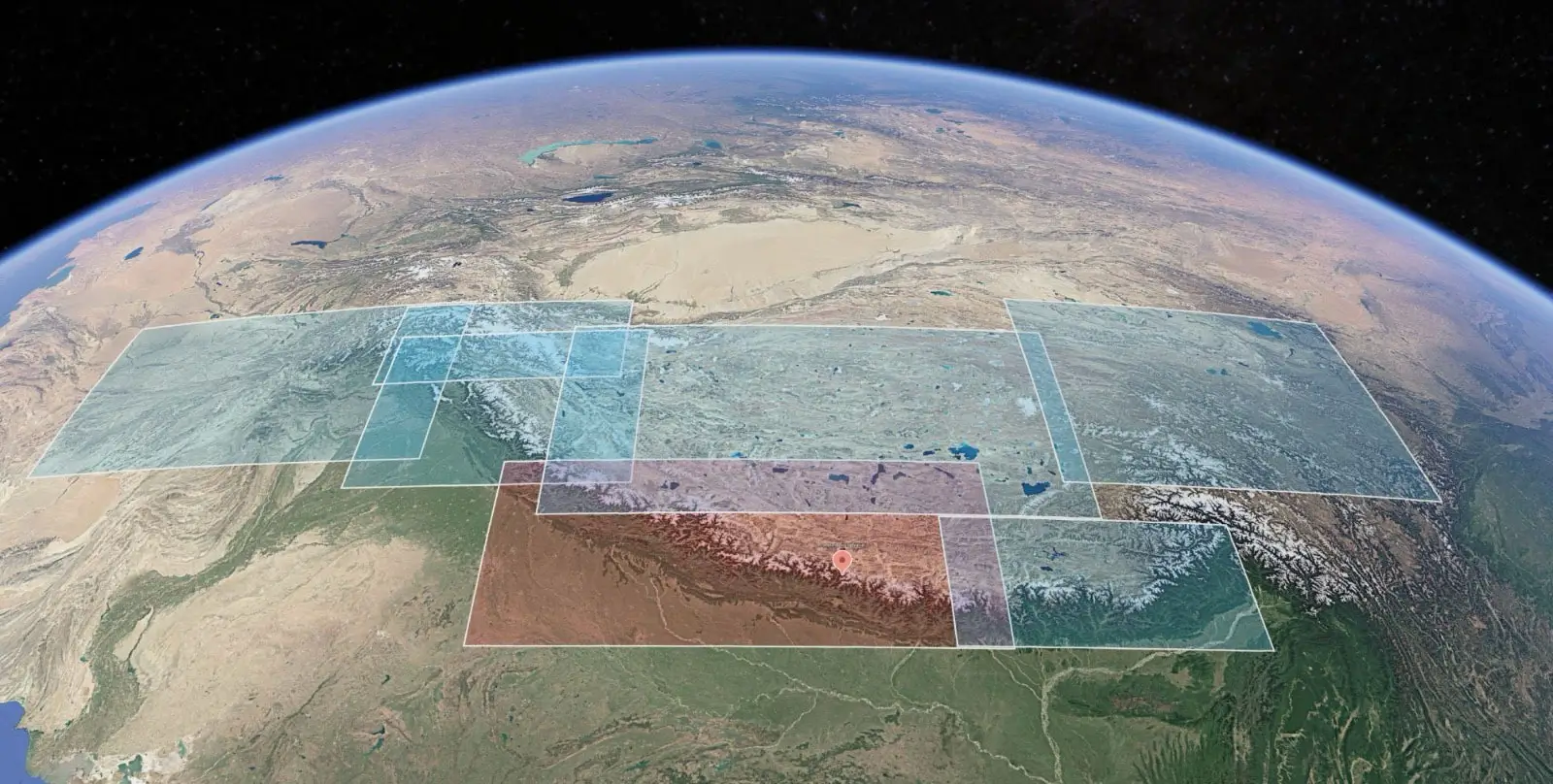
It contributes to a total glacier area of 3,001 sqkm. The average glacier size is 0.59 sqkm. The region is at an elevation of 300 to 7,708 metres above sea level.
Despite a smaller total area of 63,474 sqkm, it holds the largest glacier area at 14,653 sqkm, representing 26.27% of the listed total.
This region has the highest glacier count among the seven areas at 12,575. They cover 7,878 sqkm across a total regional landmass of 186,678 sqkm.
This region has 3,413 glaciers spanning an area of 3,702 sqkm. It also has a high baseline elevation from 3,574 to 6,751 metres above sea level.
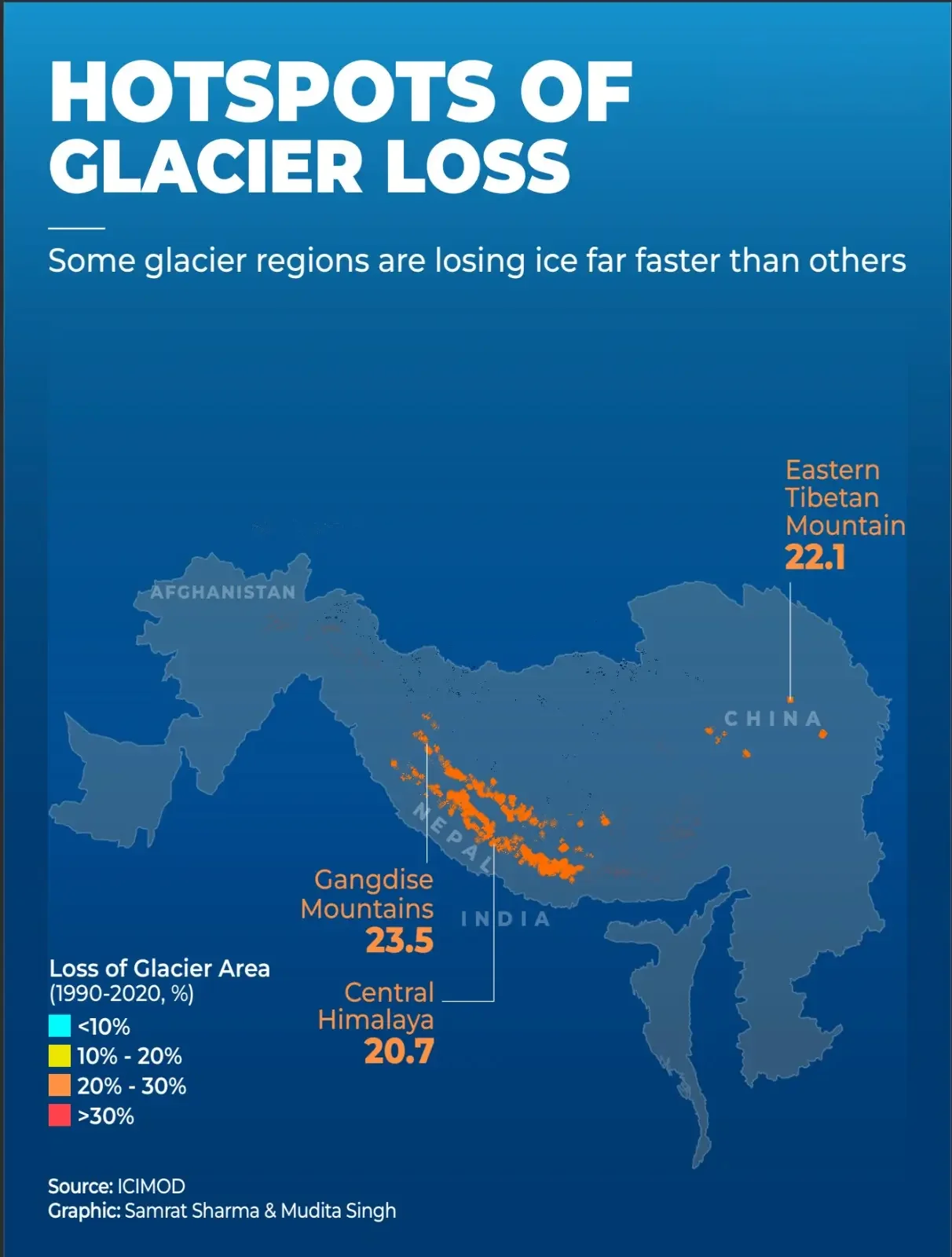
The glacier elevations are situated at high altitudes here, ranging from 3,032 to 8,091 metres above sea level. The total glacier size is 2,996 sqkm.
This area has the lowest glacier count of the seven, holding just 580 glaciers over 299 sqkm out of the total 3.30 lakh sqkm. The largest glacier in this sector measures 20 sqkm.
Studies show the HKH region has been warming at an average rate of 0.2 degree Celsius every decade for the last 50 years. Snow cover has also reduced across the HKH since the early 21st century.
The reduction in snowfall coupled with rising temperatures has implications for a glacier’s mass balance - which is the balance between the amount of accumulated and melted ice. What it means is glaciers are invaluable natural indicators of climate change.
Hence, the Nepal disaster that is being increasingly linked to melting glaciers is the biggest example of the horrors the world faces due to climate change.
Severe flash floods and landslides triggered by a low-pressure system over the Bay of Bengal have affected 35 of Nepal’s 77 districts. The Bagmati River in Kathmandu reached a 30-year peak at 14.8m, inundating Pashupatinath temple precincts. Army helicopters conducted 47 rescue sorties, evacuating 612 people from rooftops in Sindhupalchowk.
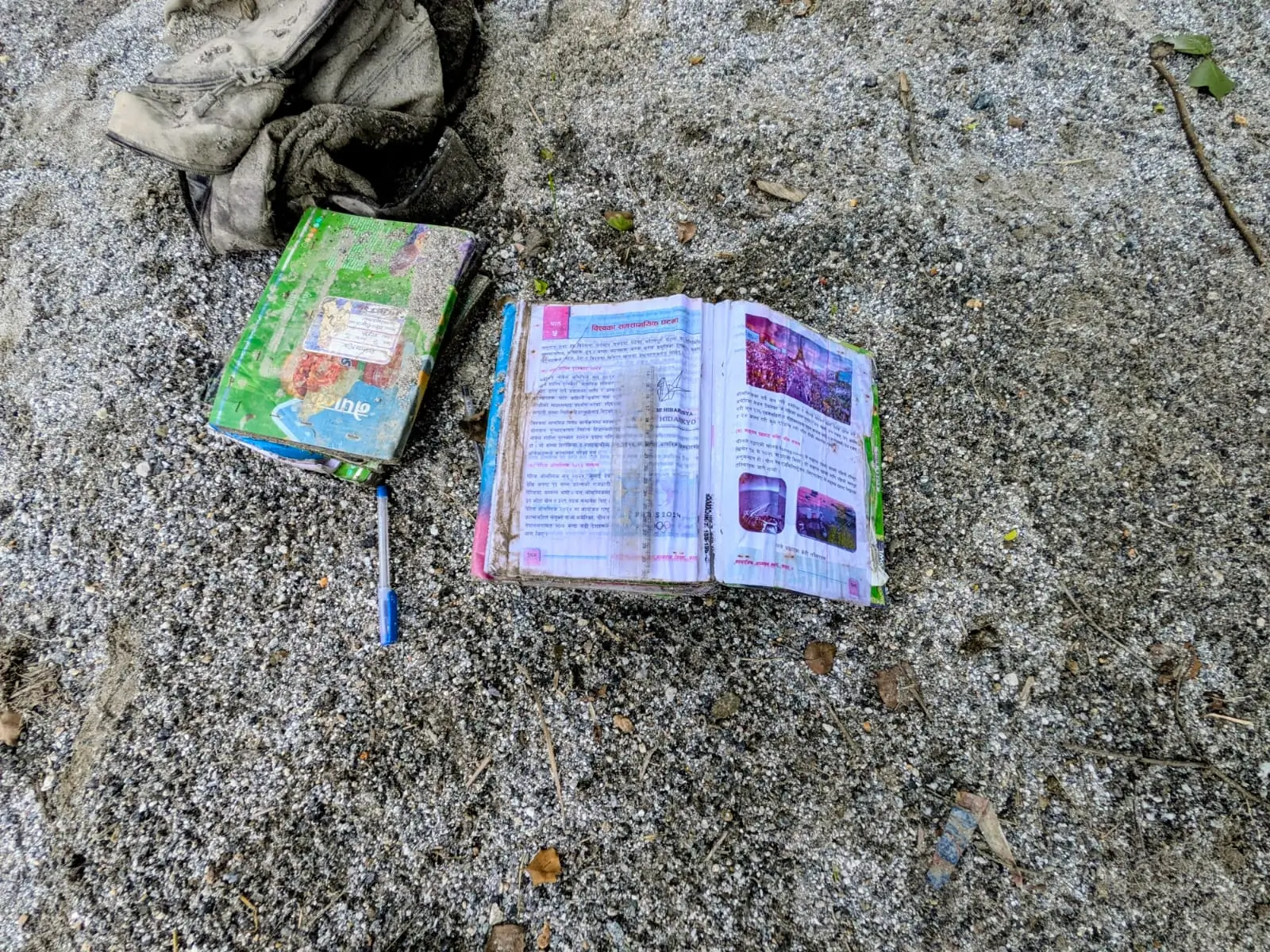
The textbooks bear the name of this boy who studied at Shri Bageshwari Secondary School. A plastic ruler was found wedged between two leaves of the book, perhaps to mark where his teacher ended her last class. Inside the bag were two pens and a lunch to be eaten during recess. His fate is unknown. He might have been lucky to reach safety, or he might have become a statistic - dead or missing. But one thing can be said for sure - he suffered, like the rest of Nepal.
The Third Pole, which includes a large chunk of India’s mountainous regions, is warming at an unprecedented rate. What happens to its ice won’t stay in the mountains. It will decide the fate of 1.49 billion people downstream.